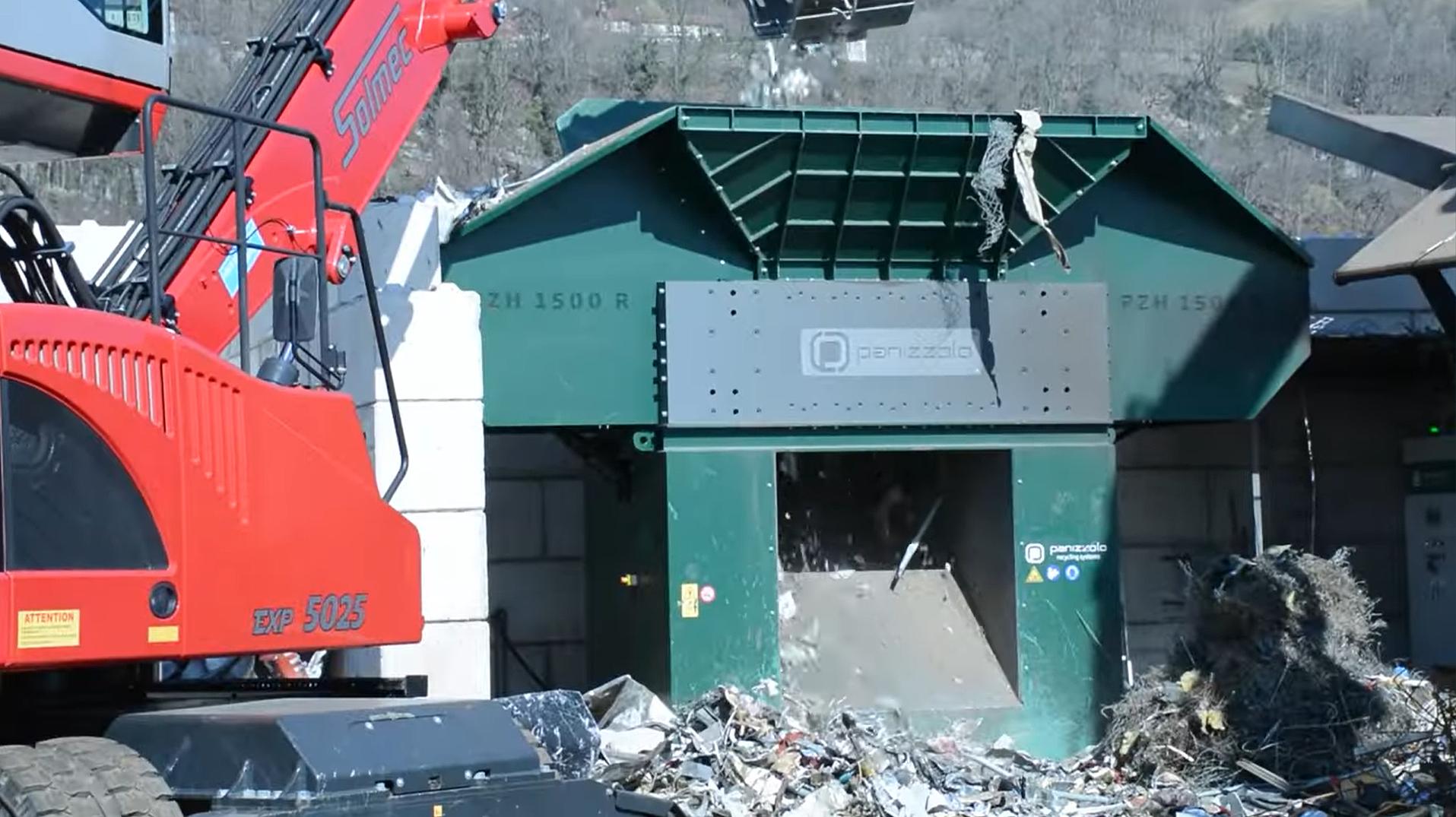


In an era where sustainability and resource efficiency are no longer optional but essential, the challenge of recycling mixed metals has never been more pressing. That’s where Italian engineering firm Panizzolo, available through Machines on The Market in the UK and Ireland, steps into the spotlight. Their expertise in treating mixed metal scraps—heterogeneous combinations of ferrous and non-ferrous materials—illustrates how technology, process innovation and circular-economy thinking can combine.
What are “mixed metals”?
Mixed metals refer to material streams that include a variety of metallic components intermingled with each other and sometimes with non-metallic fractions. Examples include:
- Electrical switchboards with steel enclosures, copper cables, aluminium parts.
- Scrap from electric motors, wiring, mixed-component industrial equipment.
- Fluff or residues from shredding operations where ferrous and non-ferrous parts are not yet separated.
These streams are inherently challenging because the different metal types (steel, aluminium, copper, brass, etc.) have different melting points, densities, and alloy characteristics—and the presence of non-metals/inert matter complicates recovery and purity.
Why is this important?
Metal remains one of the most demanded raw materials in industry. At the same time it is expensive, energy-intensive to produce from ore, and finite in practical terms. Recycling mixed metals therefore has a strong business and environmental case:
- It reduces need for primary extraction of ores.
- It cuts energy, CO₂ emissions and overall environmental footprint compared to virgin metal production.
- It gives companies access to valuable secondary raw materials—if done with high quality control. Panizzolo emphasises this: “Adequately breaking down and treating mixed metals to then put a high quality recycled metal back on the market is an economical and eco-friendly interest.”
- It supports the circular-economy concept: keep materials in use for as long as possible and recover them effectively at end of life.
How Panizzolo approaches recycling mixed metals
Panizzolo’s approach involves a sequence of mechanical treatments, sorting, separation and refining. Here are the key features:
1. Input and pre-processing
- The firm’s “Kraken” pre-shredders, for instance, are designed to handle bulky, difficult, heterogeneous scrap — helping to reduce volume and pre-condition the material. WMW+1
- The goal: break down the input so that subsequent stages can separate metal types more effectively.
2. Modular mechanical treatment
- According to Panizzolo: “Our mixed metal treatment plants efficiently handle heterogeneous and complex material flows… Each component is optimised to ensure high yields, output quality, and long-term reliability.”
- The process typically includes: shredding, grinding / hammer milling, volumetric reduction and then sorting/separation.
- The mechanical nature (as opposed to chemical) gives advantages in cost, simplicity and energy efficiency.
3. Separation & refining
- After the initial mechanical size reduction, the material goes through separation stages to isolate ferrous from non-ferrous, copper from aluminium, brass, etc. Panizzolo emphasises their ability to recover “up to the smallest ferrous fractions and above all metals such as aluminium, copper and brass.”
- Refining plants then produce output that is impurity-free and qualifies as a high-quality secondary raw material.
- Their systems include software for centralised monitoring and adaptable “recipes” depending on the input scrap type.
4. Turn-key / plant solution mindset
- Panizzolo offers not just machines but full plants, tailored to the customer’s throughput and input type requirements.
- They highlight lowered operating costs, flexibility, long-term reliability.
Benefits and value proposition
For businesses and environmental stakeholders, the benefits include:
- Higher recovery rates of valuable non-ferrous materials (which often carry higher value than ferrous).
- Reduced disposal of mixed scrap to landfill or lower-value streams.
- Ability to re-introduce the recovered metals into the supply chain as secondary raw material, closing the loop.
- Operational cost-savings: Panizzolo emphasises “operating costs below the market average” for their modular plants.
- Environmental benefits: less mining, less energy, fewer emissions, less waste.
Challenges and considerations
While the technology is strong, recycling mixed metals still presents challenges:
- The heterogeneity of input streams: the variety of metals, non-metals, coatings, wires, composites means plants must be flexible.
- The need for high output purity: the market value of recycled metals depends heavily on contamination levels.
- Investment cost: building a full plant with shredders, hammer-mills, separation systems, control software etc. is non-trivial.
- Regulatory/quality issues: ensuring output meets “End-of-Waste” standards (ie qualifies as usable secondary raw material) and environmental permits.
- Long-term maintenance, wear & tear: metal processing is abrasive and heavy-duty; equipment life and reliability are key.
Why Panizzolo stands out
- They have deep experience as direct users of processing systems—not just machine vendors, so their engineering reflects real-world feedback.
- Broad technology portfolio: from pre-shredders (Kraken) to hammer-mills to refining islands.
- Modular, flexible design: plants can be adapted for specific scrap types and throughput.
- Focus on both productivity and energy efficiency: high yields, good output quality, and low consumption/low management cost.
- Strong market-position: identified in trade/exhibition listings as a major player in mixed-metal and scrap-metal recycling technology. recyclingexpome.com+1
Outlook & future directions
- As global metal demand continues (and mining becomes more challenging), the secondary raw-material route grows in importance.
- Technology advances (automation, smarter sorting, digital control) will further drive efficiency and purity. Panizzolo’s software-centralised control is an example.
- Regulations pushing circular economy and producer responsibility will increase the volume and importance of mixed metal recycling.
- The ongoing need to process ever more complex scrap (e-waste, mixed industrial waste) means plants must evolve; Panizzolo’s recent launch of the Kraken pre-shredder addresses that. WMW
The process of recycling mixed metals is both technically demanding and commercially promising. With firms like Panizzolo leading in advanced mechanical processing, refinement and system integration, the industry is better positioned to convert complex scrap flows into high-quality secondary raw materials. For operators, the key is choosing flexible, reliable and efficient equipment and systems—so that the promise of circularity becomes reality.
To find out more and to discover how Panizzolo machinery can help support and grow your business, get in touch today for expert, bespoke advice.
WhatsApp: +44 7787 411485
E-mail: marketing@machinesonthemarket.com
www.machinesonthemarket.com