

Used Waste and Recycling Machinery: The Complete Buyer’s Guide
Published:
Buying waste and recycling machinery is one of the biggest decisions a recycling business makes. Get it right and the machine pays for itself in months. Get it wrong and you’re left with downtime, repair bills and a yard full of material you can’t process.
Good used machinery can save you a big slice of the cost of new, and it’s often available straight away instead of after a long factory lead time. At Machines On The Market we specialise in used waste and recycling machinery from the brands the industry trusts, including Lindner, Untha, M&J, Terex and Arjes.
This guide explains the main types of recycling machinery, what each one does, and what to check before you buy.
Why buy used waste and recycling machinery?
- Lower cost: a well-maintained used machine can cost far less than the same model new, freeing up capital for the rest of your operation.
- Fast availability: new shredders and plants can take months to build and deliver. Used machines are often ready to go.
- Proven performance: the established models from the major manufacturers are known quantities, with parts and service support widely available.
- Lower depreciation: the steepest drop in value happens in the first few years, so a used machine holds its value better if you sell it on later.
Types of waste and recycling machinery
Shredders
Shredders are the workhorses of waste processing, and they make up the biggest part of our waste and recycling stock. The main types are:
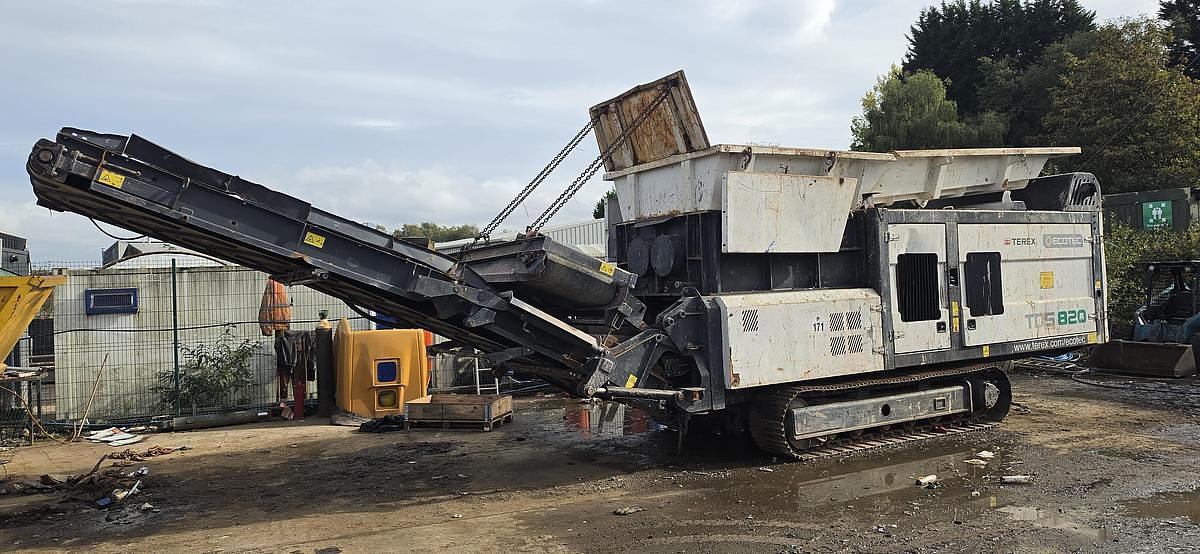
- Twin shaft slow speed shredders: ideal for pre-shredding tough, bulky material such as commercial and industrial waste, wood, tyres, bulky household waste and metals. They’re low speed and high torque, so they handle contamination well. Typical models include the Lindner Urraco, M&J Pre Shred, Arjes Titan and Terex Ecotec TDS ranges.
- Single shaft shredders: used for secondary shredding to a more controlled output size, often with a screen. They’re common for producing refuse-derived fuel (RDF) and solid recovered fuel (SRF), and for processing plastics. The Untha XR range is a well-known example.
- Mobile shredders: tracked or wheeled machines that can move between sites or around a yard. A good choice for contractors and for operations working with varying feedstocks.
- Static shredders: fixed electric machines built into a processing line, usually cheaper to run per tonne than diesel mobile units.
Balers and compactors
Balers compress loose material into dense bales that are cheaper to store, transport and sell:
- Horizontal balers for high volumes of cardboard, paper and plastics
- Vertical balers for smaller volumes at the point of collection
- Ferrous and non-ferrous balers, including shear balers that cut and bale scrap metal in one process
Separation equipment
Separation is where much of the value in a recycling line comes from:
- Eddy current separators: recover non-ferrous metals such as aluminium and copper
- Overband and drum magnets: pull out ferrous metals
- Air separators and windshifters: split light fractions such as film and paper from heavier material
- Metal separators: a general term for equipment that removes and recovers metals at different stages of the line
Size reduction: granulators, shears, hammer mills and more
After primary shredding, many operations need to reduce material further. Granulators are widely used in plastics recycling. Shears cut heavy scrap metal. Hammer mills, raspers and pulverisers break material down to a fine, consistent size.
Screening, conveying and picking
- Trommels and screeners: separate material by size, for example removing fines from waste or grading compost and wood chip
- Conveyors and feeders: move material between machines and control the feed rate
- Picking stations: let operators hand-sort recyclables and contaminants from a moving belt
Full recycling plants
Sometimes the best value is a complete plant: a shredder, separation, screening, conveyors and controls designed to work together. Buying a full used plant can save a huge amount on design, purchase and installation compared with building a line from new. We regularly have full plants, washing lines, float-sink tanks and drying equipment available.
What to check before you buy used recycling machinery
- Hours and service history: ask for the hour reading and any service records, and find out what work has been done recently.
- Cutting tools and wear parts: on shredders, check the condition of the shafts, cutters, counter-knives and screens. These are expensive to replace, so their condition makes a big difference to value.
- Gearboxes, hydraulics and drives: look for leaks, listen for noise, and ask whether gearboxes or hydraulic pumps have been rebuilt.
- Electrics and control systems: check that the control panel and PLC are working, and whether there’s any fault history.
- Power supply: check the kW rating against the power available on your site. An electric static shredder can need a substantial supply.
- Throughput and output size: make sure the machine matches the tonnes per hour and the output size your process and your customers need.
- Dimensions and transport: plan how the machine will be transported, unloaded and installed, especially for large static units.
- Documentation and safety: check for manuals, CE or UKCA marking, and that all guards and safety systems are in place.
- See it working: wherever possible, see the machine running, ideally on material similar to yours.
We’re always happy to talk through any machine on our books and help you decide whether it suits your operation.
New vs used recycling machinery: which is right for you?
New machinery makes sense if you need a very specific configuration, the latest technology or a full manufacturer warranty. For most operators, though, good used machinery gives far better value for money. It’s often the smart choice when you’re adding capacity, replacing a worn-out machine quickly, or starting a new line on a budget.
Selling your waste and recycling machinery
If you’re upgrading, downsizing or closing a line, we can help you sell your used recycling machinery to buyers in the UK and overseas. Get in touch with details and photos of your machine.
More than waste and recycling
Alongside waste and recycling machinery, we also list:
- Crushing and screening equipment
- Construction and material handling
- Forestry and arb machinery
- Panizzolo hammer mills and recycling equipment
- Auxiliary equipment, parts and attachments
Waste and recycling machinery FAQs
What machines do I need to start a recycling business?
It depends on the material you’re processing. Most operations start with a primary shredder, then add separation (magnets and eddy current separators), screening (a trommel or screener), conveyors and a baler. A complete used plant can be a cost-effective way to get started.
What’s the difference between a single shaft and a twin shaft shredder?
A twin shaft shredder is usually used for primary shredding of bulky, mixed or tough material. A single shaft shredder usually works with a screen to give a more uniform output size, which makes it a common choice for secondary shredding, RDF/SRF production and plastics.
Is used recycling machinery reliable?
Yes, if it has been well maintained and you buy from a seller who knows the machines. Check the service history, wear parts and running condition, and see the machine working where you can.
Do you sell recycling machinery for export?
We work with buyers in the UK and internationally. Contact us about any machine you’re interested in.
Can you help me sell my machine?
Yes. Send us the details and photos and we’ll be in touch.